Organisation-led
Recommendations begin with the organisation, its priorities and the way its people work.
Pollysys helps UK organisations make practical decisions about AI, managed IT and digital growth. We connect advice with delivery so that technology supports real work without creating unnecessary complexity.
OUR STORY
Pollysys was developed around a straightforward observation: technology works best when it reflects how an organisation actually operates. Individual tools may solve individual problems, but organisations rarely experience technology in isolation. IT support affects security. Cloud decisions affect cost and access. Automation depends on reliable processes and information. AI requires appropriate governance, while digital growth depends on systems capable of supporting new demand. This connected view shapes the way Pollysys works. We begin with the organisation, the people involved and the outcome being pursued. We then consider which combination of advice, technology and ongoing support is appropriate. Our work spans AI consultancy, automation, managed IT, Microsoft 365, AWS, cloud services, cybersecurity, SEO and digital marketing. These services can be used individually or connected through a broader plan. The aim is not to introduce more technology for its own sake. It is to make existing systems clearer, address worthwhile problems and create improvements that remain manageable after implementation.

THE JOURNEY
Pollysys has developed by listening carefully to the organisations we support and understanding how technology affects their everyday work. Experience across IT, cloud, security, automation, AI and digital growth has shown where separate systems and decisions need to work together. That experience continues to shape how we work today. We focus on practical improvements, clear responsibilities and solutions suited to each organisation—helping technology remain useful, manageable and ready to support future change.
Pollysys began by helping organisations address the systems and decisions behind everyday work: access, support, infrastructure and dependable operations. This provided a close view of how technology choices affect people after implementation.
HOW WE OPERATE
A connected technology partner focused on practical decisions, responsible delivery and long-term usefulness.
Recommendations begin with the organisation, its priorities and the way its people work.
Every proposal should have a clear purpose, realistic scope and understandable route to implementation.
AI, IT, security, cloud and digital growth are considered together where their dependencies matter.
Responsibilities, decisions and appropriate controls are defined before avoidable complexity develops.
Support can begin with a specific question, an individual project or a broader technology requirement.
Success is measured by whether the work improves operations, reduces uncertainty or supports a worthwhile outcome.
WHAT WE DO
Pollysys brings together the capabilities organisations increasingly need to operate securely, improve processes and develop their digital presence.
Begin by identifying where AI could reduce friction, improve access to information or support a defined decision. AI Consultancy helps establish priorities, readiness and appropriate guardrails. Automation & Agentic AI turns suitable opportunities into controlled workflows with permissions, exception handling and human review built into the process.
Managed technology should make work easier to organise, protect and support. Pollysys connects Managed IT Services, Microsoft 365, AWS Services, Cloud Services and Cybersecurity around the needs of users and the organisation, whether the requirement is a focused improvement, a cloud decision or ongoing operational support.
Digital growth starts with being findable, understandable and easy to engage. SEO Services improve the technical and content foundations that support relevant search visibility. Digital Marketing Services connect messaging, campaigns, measurement and conversion routes to useful commercial objectives.

HOW WE ADVISE
Technology decisions should reflect the organisation’s requirements, existing environment, internal capabilities, risks and budget—not simply the availability of another product. Pollysys begins by understanding the problem and reviewing what is already in place. Suitable systems should be retained where they continue to serve their purpose. Change should be recommended only where there is a clear operational, security or commercial reason. Options are explained in plain English, including important dependencies, costs, limitations and responsibilities. This gives decision-makers a clearer basis for deciding what to adopt, defer or reject. Where implementation is appropriate, recommendations can be connected to a practical delivery plan so the reasoning behind the decision is not lost between advice and execution.
HOW WE WORK
Pollysys combines strategic thinking with practical involvement. Advice is grounded in how systems, processes and people interact during everyday operations.
Clarify the organisation, existing technology, current pressures and desired outcome before proposing change.
Explain choices, dependencies, responsibilities and trade-offs so stakeholders understand what is being recommended.
Carry the reasoning behind each decision into implementation, adoption, review and ongoing improvement.
OUR PROCESS
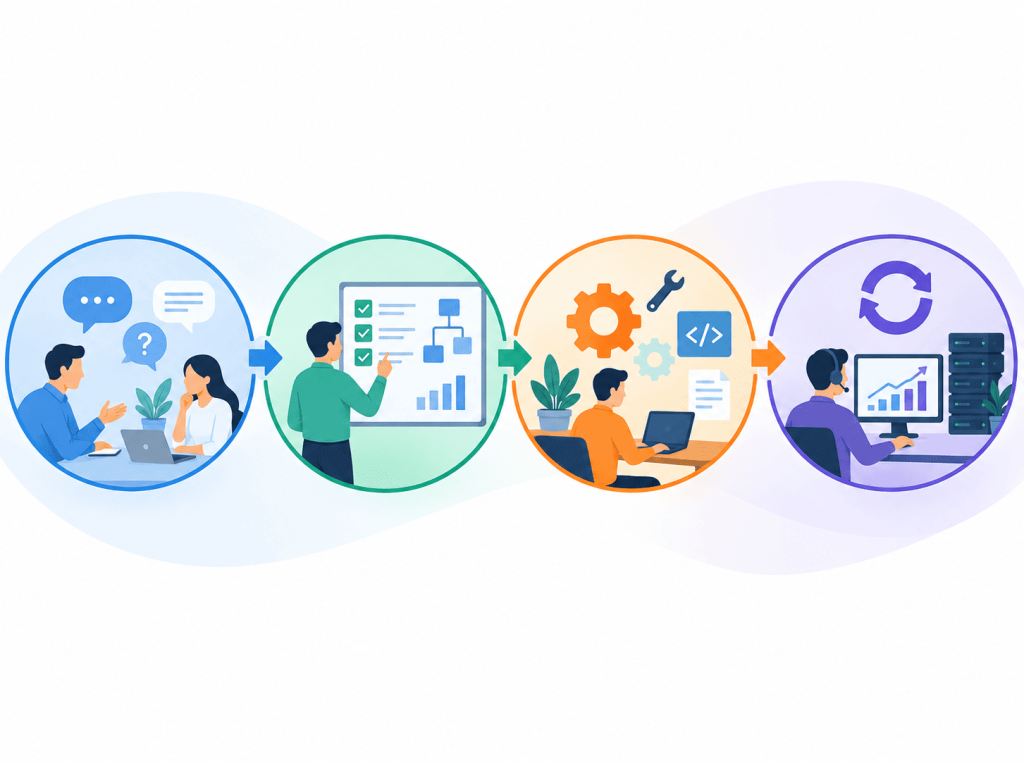
The scale may vary, but each engagement follows the same practical sequence.
Listen - Understand the organisation, the issue being addressed, the people involved and the result that matters. Plan - Review the current position, define priorities and agree a proportionate scope, responsibilities and route forward. Build - Configure, implement or improve the selected solution with appropriate documentation, controls and communication. Run - Support the solution, review its performance and make considered improvements as circumstances change.
OUR PRINCIPLES
Recommendations should be connected to the organisation’s requirements and agreed criteria. Relevant commercial interests or delivery constraints should be stated, while viable alternatives and their compromises are made visible.
Important decisions deserve informed attention. Advice should reflect the operational consequences of each decision and remain sufficiently connected to delivery for assumptions to be tested and challenged.
Technology earns its place by improving real work. Scope, controls and documentation should suit the organisation’s capacity, with adoption and maintainability considered alongside the initial implementation.
Clients should know what is being proposed, what it depends on and who owns the next decision. Risks, uncertainties, costs and changes to scope should be discussed plainly.
WHAT EXPERIENCE TEACHES
The details change, but several principles repeatedly improve technology decisions.
A backup is only one part of recovery. Ownership, access, documentation and appropriate restoration testing all matter when an organisation needs to understand whether its recovery arrangements are workable.
A technically correct system can still produce poor results if people do not understand it. Communication, training, permissions and realistic working practices belong in the implementation plan.
Additional tools and features create additional responsibilities. A smaller solution that people can operate confidently may deliver more lasting value than a complex design with unclear ownership.
Recommendations may be influenced by commercial relationships, product familiarity or delivery capacity. Stating relevant interests and evaluation criteria helps clients assess the advice more clearly.
Every integration, custom rule and exception needs someone to understand and maintain it. The long-term operational burden should be considered before complexity is introduced.
Useful automation depends on a defined process, suitable information, clear permissions and accountable owners. Improving these foundations may be the most valuable first step.
WHERE WE WORK
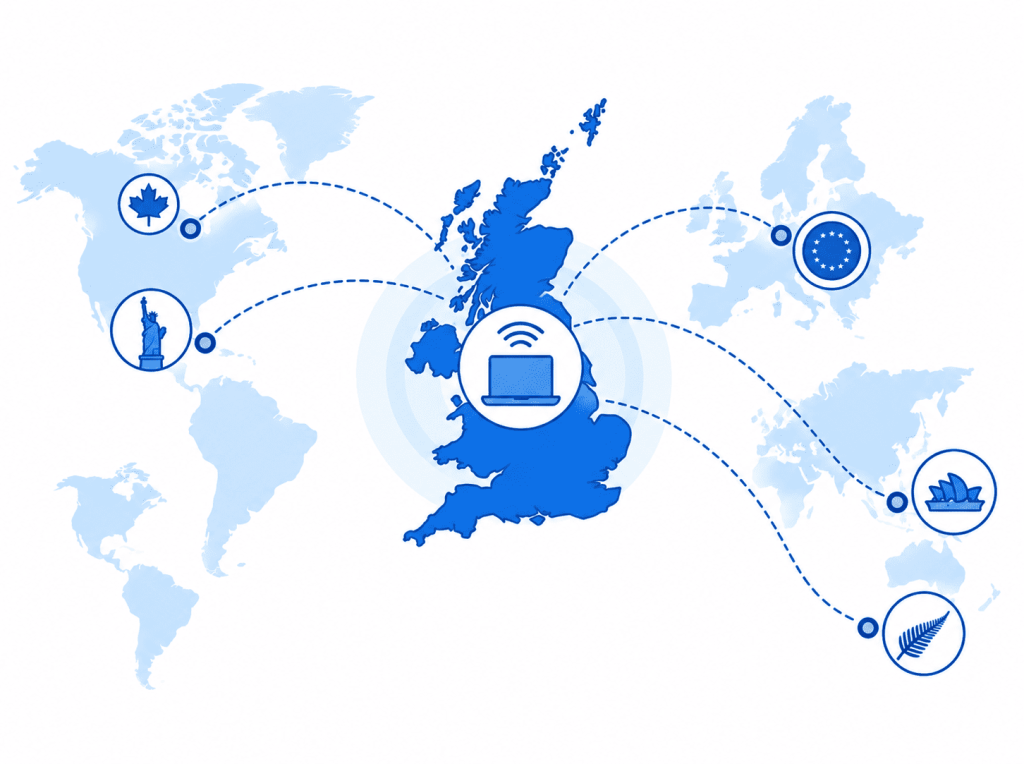
Pollysys is focused on organisations in the United Kingdom. Much of the discovery, planning, consultancy and support can be delivered remotely, allowing the appropriate people to contribute without making travel the default. Remote delivery does not mean an impersonal service. Responsibilities, communication routes, review points and access arrangements are agreed for each engagement. Workshops and working sessions can be structured around the client’s team, including colleagues based in different locations. On-site assistance may be appropriate when the work involves physical infrastructure, in-person discovery, a significant transition or another requirement that cannot be addressed effectively at a distance. Availability, location, travel arrangements and any associated costs should be confirmed during scoping. Organisations with distributed staff can also explore Pollysys support for remote teams, including collaboration, access, security and dependable day-to-day technology.
EXPLORE POLLYSYS
Explore our services, sector-focused solutions and practical insights to find the most relevant starting point.
Explore AI, managed IT, cloud, cybersecurity and digital growth capabilities.
See how Pollysys connects technology priorities for different types of organisations.
Read practical guidance on AI, automation, IT, security and digital growth.
FAQ's
Pollysys works across all three types of need, but the engagement is defined by the problem rather than a single label. That can mean technology and AI consultancy, a planned implementation, managed IT support or digital growth work. The scope, responsibilities and commercial arrangement should be agreed before work begins, so the client understands whether Pollysys is advising, delivering, operating a service or working alongside another provider.
AI, Managed IT and Digital Growth increasingly affect one another. Automation depends on dependable systems, suitable data and controlled access. Managed technology decisions influence productivity and security. Digital growth relies on a credible proposition, sound platforms and useful measurement. Bringing these disciplines together helps Pollysys consider the wider consequences of a decision while allowing clients to engage for only the service they actually need.
Yes, where responsibilities and access can be agreed clearly. Pollysys may provide a specialist assessment, deliver a defined project or support an area outside the existing team’s remit. The working model should identify ownership, decision-makers, communication routes, system access and escalation boundaries. Existing relationships are not treated as obstacles; the aim is to fill an agreed gap without creating unnecessary duplication or uncertainty.
Ownership and usage rights should be stated in the proposal or contract for each engagement. They may differ for client-specific documents, configurations, automation workflows, third-party platforms, licensed software and Pollysys’s pre-existing methods or materials. Clients should review these terms before work begins and ensure that administrator access, documentation and handover expectations are also clear. Do not publish a blanket ownership promise until the approved contract position is confirmed.
No. It is often more useful to begin with the outcome, problem or decision in front of the organisation. Pollysys can help clarify whether the next step is an assessment, a process review, an IT improvement, an AI opportunity, growth support or no immediate technology purchase at all. An initial conversation should establish context and determine whether there is a sensible fit.
Yes, where a defined assessment is the appropriate way to create clarity. The scope might cover an AI opportunity, a Microsoft 365 environment, cybersecurity priorities, cloud options, an operational process or digital visibility. The intended output, information required, limitations and next decision should be agreed in advance. A one-off assessment does not need to become an ongoing service unless both parties consider that useful.
Pollysys is focused on organisations in the United Kingdom. Many consultancy, planning and support activities can be delivered remotely. On-site requirements, travel arrangements and availability should be discussed during scoping.
START A CONVERSATION
You do not need to arrive with a completed specification. Tell us what is creating pressure, uncertainty or opportunity, and we will help identify a sensible next step.