Cloud Readiness Assessment
Review workloads, dependencies, existing costs, risks and internal capability before deciding what should change, remain or move.
Plan, migrate and operate cloud environments with clearer choices across platforms, access, resilience, cost visibility and ongoing responsibility.
Cloud services can provide flexible access to infrastructure, platforms, storage and applications without requiring every capability to be operated on your premises. The opportunity is useful, but the decisions still need care. Each workload has different requirements for performance, access, integration, resilience, data handling and cost. Pollysys helps UK organisations understand those requirements before choosing where and how a workload should run. That may mean public cloud, private cloud, retained on-premises systems or a deliberately designed combination. We can support assessment, migration planning, improvement work and clearly scoped ongoing operations. The objective is not to move everything indiscriminately. It is to create a cloud environment that supports the work, has understandable ownership and can be reviewed as requirements change.

WHY POLLYSYS?
Recommendations begin with workload requirements, operational responsibilities, risk and cost—not a preferred platform selected in advance.
WORKLOAD PLANNING
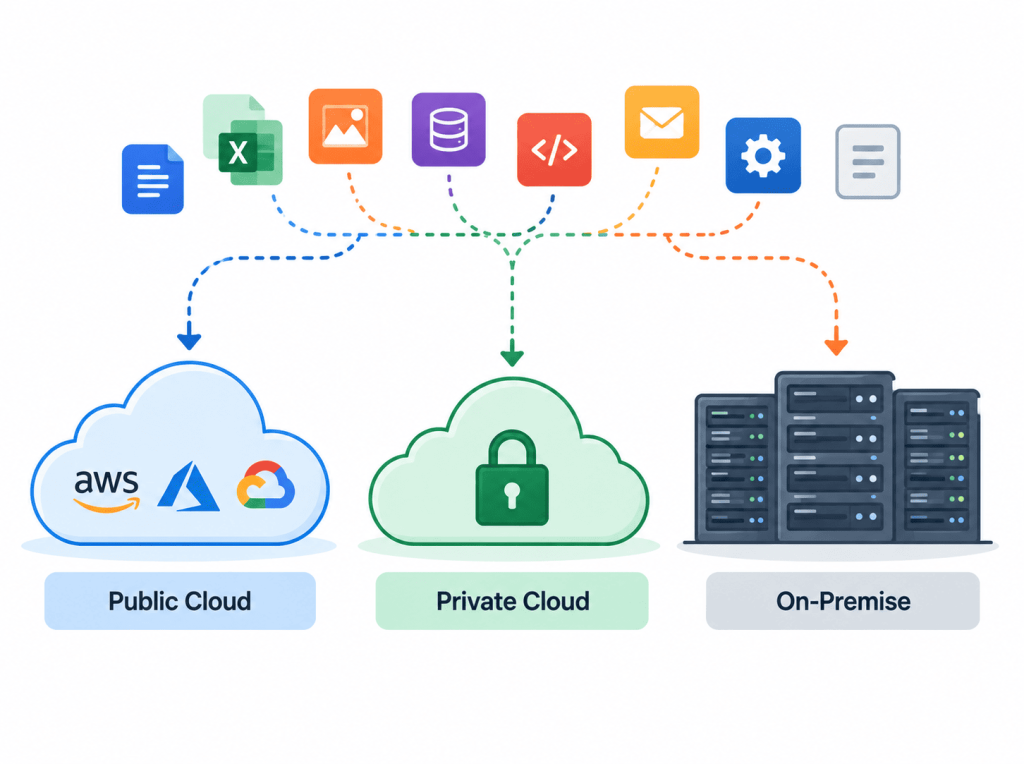
Different applications and data sets may justify different environments. Pollysys assesses business importance, technical dependencies, access patterns, internal capability and future plans before recommending a proportionate direction.
CONTROLLED MIGRATION
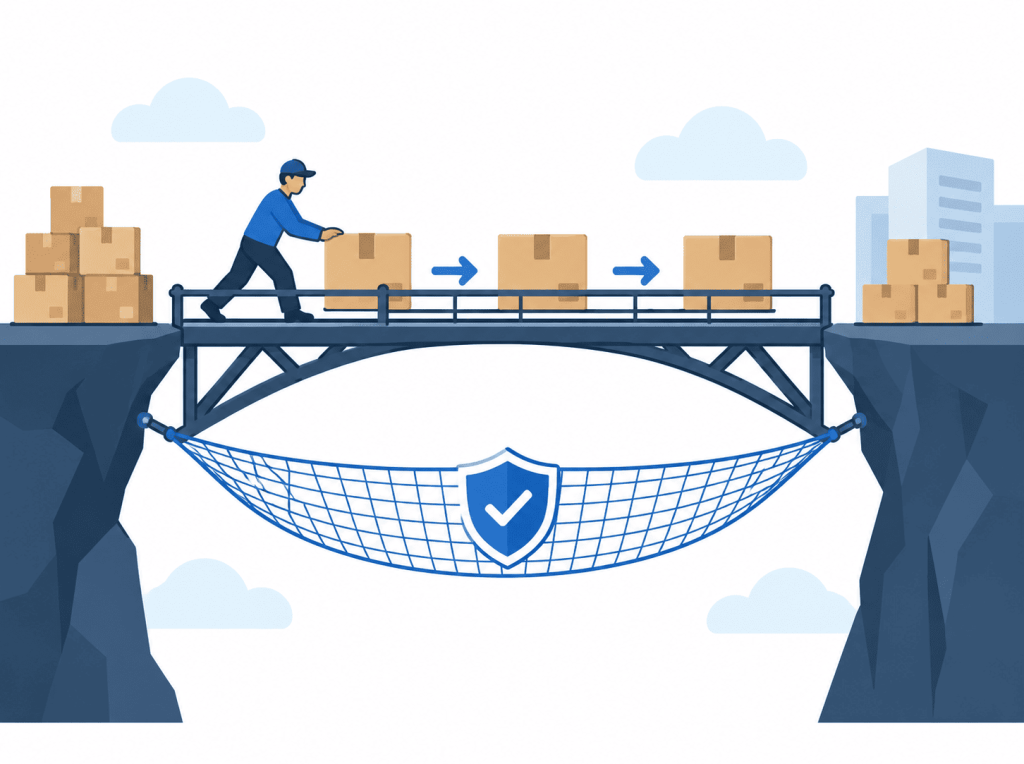
A migration should account for dependencies, users, data, security, testing and recovery before cutover. Pollysys develops a plan around the environment and the organisation’s tolerance for disruption rather than relying on a standard sequence.
OUR APPROACH
Cloud services should be selected according to the workload, available skills and level of control your organisation requires. Pollysys helps you compare infrastructure, platform and software options while making the responsibilities of your team and each provider easier to understand. Architecture, cost, security, governance and operational support are considered together before changes are recommended. The resulting arrangement may be managed internally, supported jointly or placed within an ongoing managed service. Each decision is documented so ownership remains clear as systems, users and organisational needs change.
Infrastructure, platforms and finished software place different responsibilities on the customer and provider. Pollysys explains the practical differences, then helps select an arrangement that fits the workload, skills available and level of control required.
POTENTIAL BENEFITS
Cloud resources can be adjusted as requirements change, subject to provider capabilities, application design and the controls agreed for scaling.
Tagging, budgets and reporting can help teams understand material spend, investigate change and assign responsibility for cloud consumption.
Cloud-hosted applications can support distributed work when identity, device, connectivity and information controls are designed for the organisation.
Architecture, backup and recovery arrangements can be matched to workload importance, recovery objectives and the responsibilities accepted by each party.
WHAT’S INCLUDED
Select a focused engagement or combine relevant capabilities within one clearly defined cloud programme.
Review workloads, dependencies, existing costs, risks and internal capability before deciding what should change, remain or move.
Plan workload and data transitions with documented testing, communication, cutover, rollback and post-migration review.
Support agreed monitoring, maintenance, access, incidents and reporting within a defined operating model and service scope.
Improve visibility through tagging, budgets, utilisation evidence, change controls and clearly assigned responsibility for cloud resources.
Coordinate cloud and retained environments around workload requirements, integration, data handling, internal skills and future flexibility.
Define backup coverage, retention, recovery objectives, testing responsibilities and practical response steps according to workload importance.
HOW WE WORK
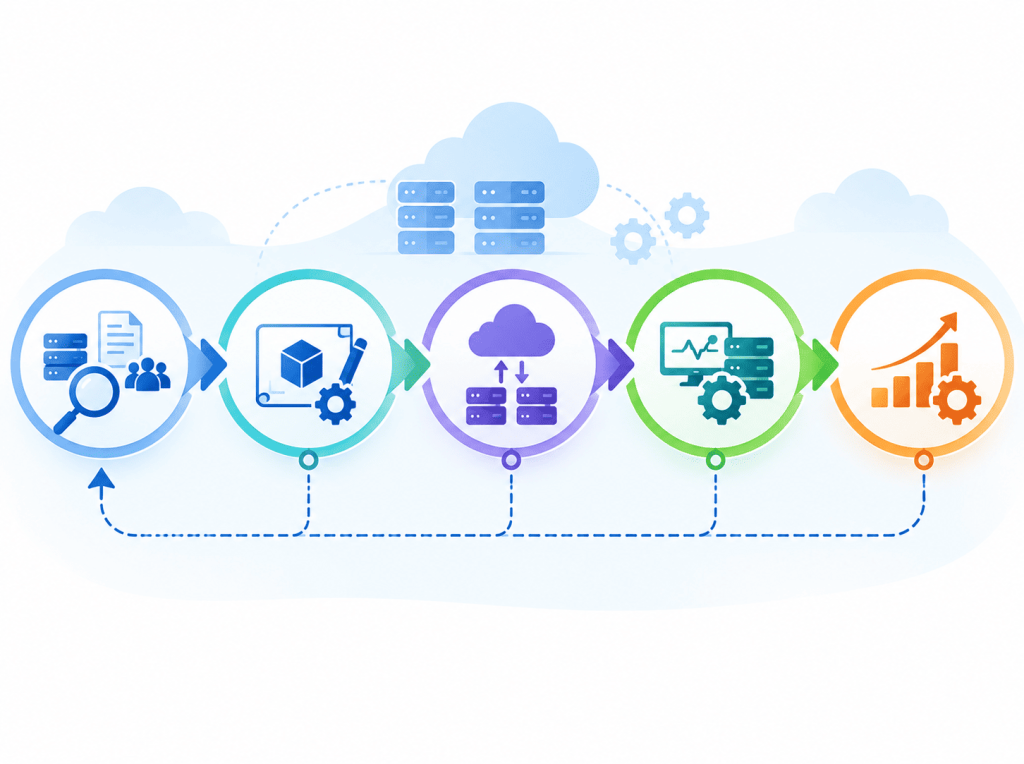
Two views of one structured cloud engagement.
1. Discover — Understand workloads, users, dependencies, current costs, constraints and intended outcomes. 2. Design — Recommend a proportionate target environment, responsibilities and migration or improvement plan. 3. Transition — Implement agreed changes with testing, communication, decision points and rollback arrangements. 4. Operate — Follow the documented support, monitoring, access, maintenance and reporting model. 5. Improve — Review performance, cost, risks and changing business requirements at an agreed cadence.
WHO WE SUPPORT
Your current environment, internal capability and business priorities determine the most appropriate place to begin.
Understand which workloads could move, which should remain and what must be addressed before a transition.
Create clearer visibility and ownership across cloud services, Microsoft 365, applications and retained on-premises systems.
Identify material cost drivers and assess practical changes without assuming that every environment contains immediate savings.
Review portability, contracts, data movement and operational dependencies before deciding whether diversification is worthwhile.
Consider access, data location, retention, recovery and contractual responsibilities in relation to applicable requirements.
Assess whether architecture, governance and operational capacity can support new users, locations, services or demand.
CONNECTED TECHNOLOGY SERVICES
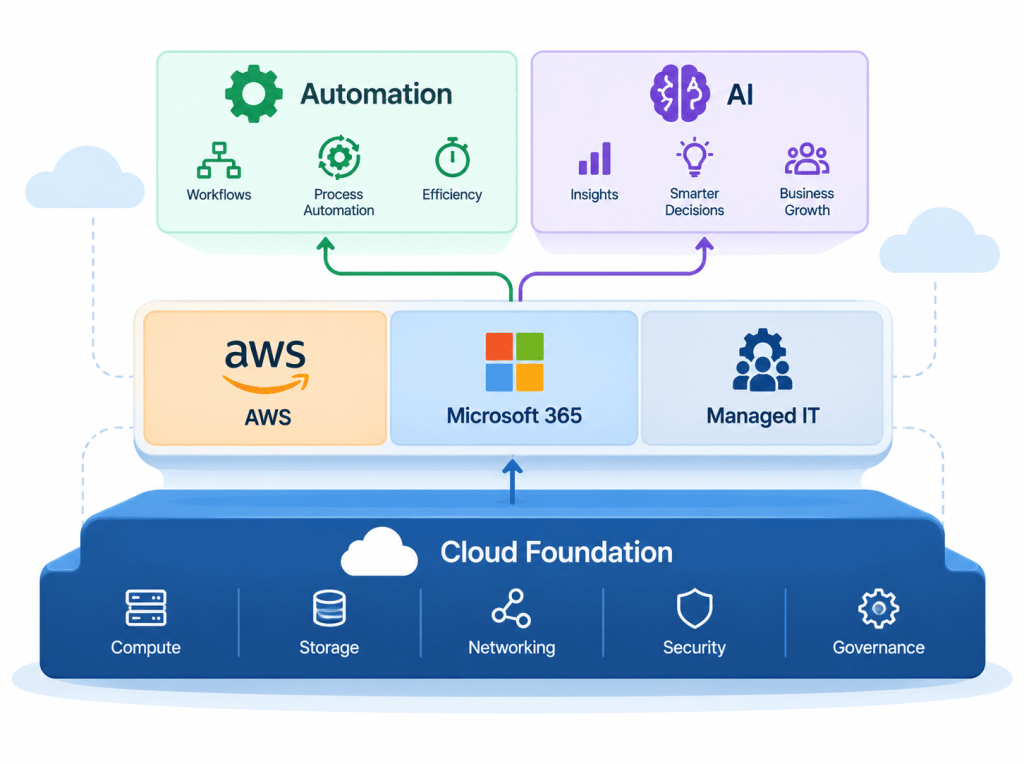
Cloud decisions often affect managed support, Microsoft 365, cybersecurity, data and future automation. Pollysys can connect these workstreams while defining the scope and accountable owner for each. Where a workload belongs specifically on AWS, the dedicated AWS Services page provides a more focused route.
The answer depends on your workloads, integrations, internal capability, data requirements, budget and existing commitments. Pollysys can compare suitable public, private, hybrid or retained options and explain the trade-offs. A recommendation should follow discovery rather than a preference for one provider.
Pollysys can support assessment, planning and migration activity where the required platforms and workloads fall within confirmed capability. The scope should identify dependencies, testing, communication, cutover, rollback and post-migration responsibilities. No migration should be described as risk-free or disruption-free.
A review may identify unused resources, unsuitable sizing, pricing choices or ownership gaps, but savings depend on the environment and business requirements. Pollysys will assess available evidence and explain options before making recommendations. We do not promise a saving without completing that work.
Hybrid arrangements can be appropriate when workloads have different performance, integration, data or operational requirements. Pollysys can help assess and coordinate cloud and retained systems where the technologies fall within scope. Confirm the supported platforms, locations and ongoing responsibilities during discovery.
START WITH CLARITY
Discuss your current environment, intended change and operational concerns. Pollysys can help define whether the next step should be an assessment, migration plan, improvement project or ongoing support arrangement.