User and Device Support
Provide an agreed route for user issues and administer supported laptops or desktops, including applicable configuration, maintenance and device records within the service scope.
Keep users, devices and essential systems supported through a managed service with agreed responsibilities, clearer support routes and technology decisions connected to your operational priorities.
Organisations depend on devices, identities, applications, cloud services and reliable access to information. When responsibility is unclear, routine issues accumulate and important maintenance competes with everyone’s main work. Managed IT gives these day-to-day needs an agreed operating structure. Pollysys can provide an outsourced service or work alongside an internal IT lead, depending on the environment and scope. Support routes, responsibilities, maintenance activities, reporting and escalation arrangements are documented before service begins. The aim is to give users a clearer way to obtain help and decision-makers a better view of the technology they rely on, without assuming that every organisation needs the same package.
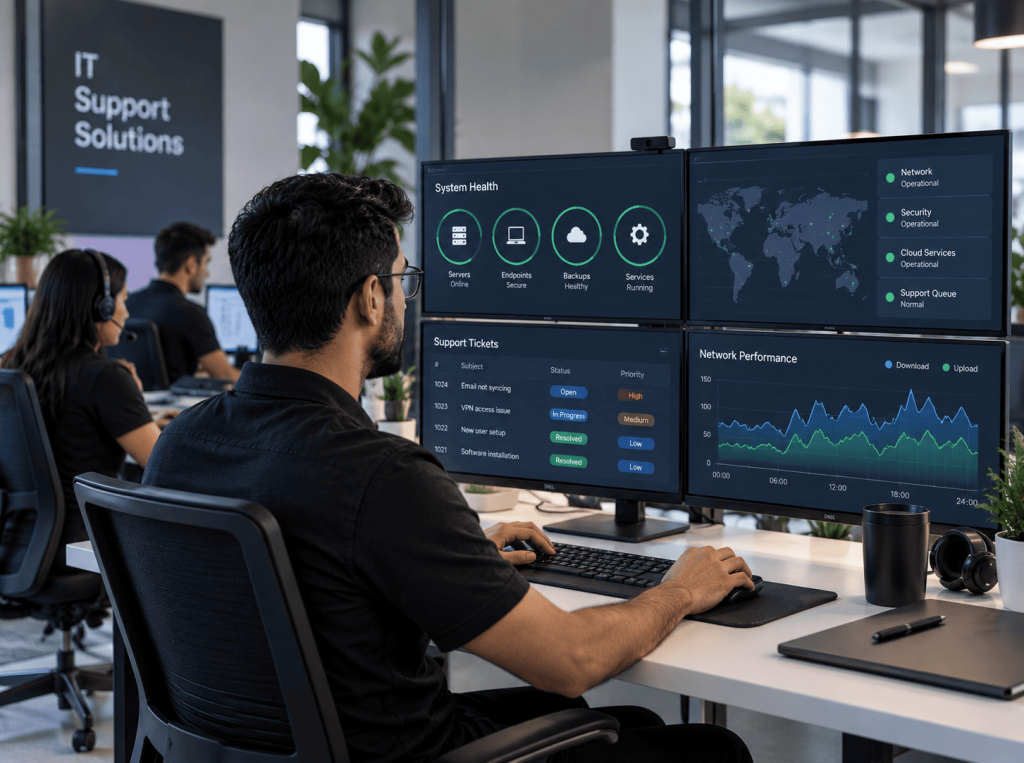
WHY POLLYSYS?
Regular oversight can reveal maintenance, support and security needs before they become harder or more expensive to address.

PLANNED IT MANAGEMENT
Managed IT is not only about responding when something breaks. It creates a structured way to maintain supported systems, assist users and keep important technology responsibilities visible. Pollysys works around your agreed environment and priorities, helping routine IT needs reach the right owner before they become a larger operational burden.
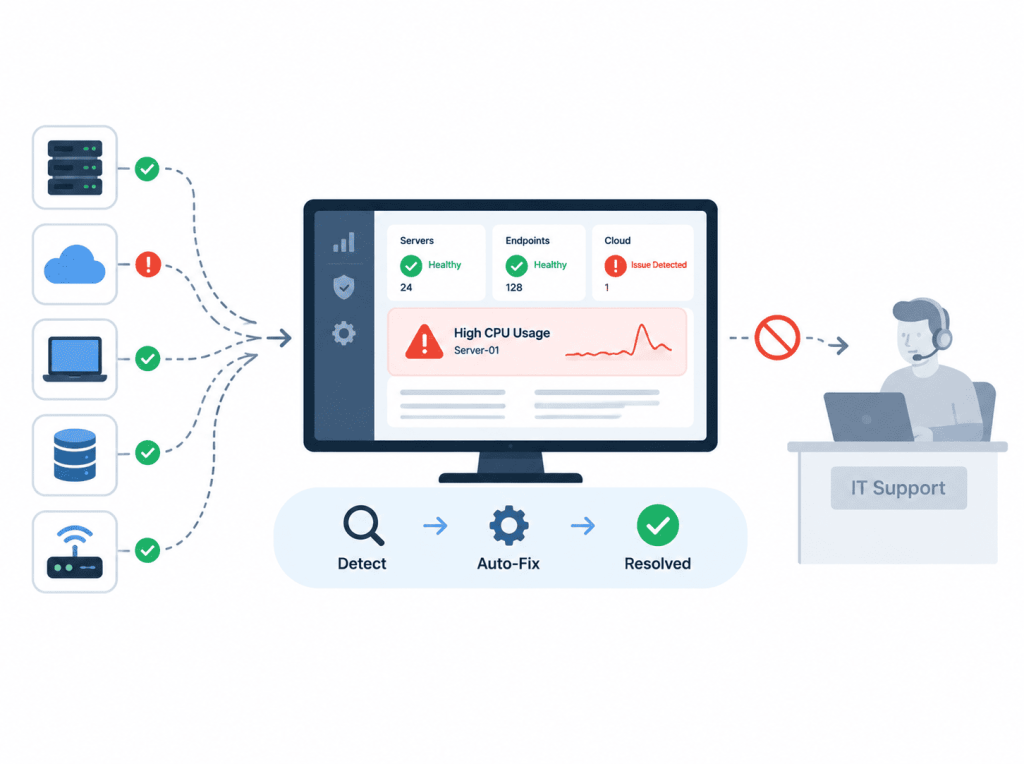
PLANNED, NOT SIMPLY REACTIVE
Managed IT combines user support with agreed monitoring, maintenance and administration. The precise activities depend on the service scope, supported systems and access available, but the objective remains consistent: identify needs, assign ownership and reduce avoidable uncertainty.
CLEAR SUPPORT ROUTES
A managed service works best when users know where to ask for help and decision-makers understand what the provider owns. Pollysys agrees the support model, communication routes, escalation points and service boundaries before ongoing delivery begins.

Approach
Effective managed IT begins with a shared understanding of your organisation, its technology and the responsibilities included within the service. Pollysys documents the environment, agrees support routes and defines how routine requests, technical issues and higher-priority concerns should be handled. Security, maintenance and continuity are considered throughout the arrangement rather than treated as separate tasks. Where responsibility transfers from another provider, the transition is planned carefully so access, suppliers, devices, Microsoft 365, backups and outstanding risks remain visible and appropriately managed.
The people responsible for the service should have access to useful documentation and an appropriate route to technical expertise. The exact support structure, contacts and escalation model are agreed within the service scope.
POTENTIAL BENEFITS
Users know how to request help, while agreed triage and escalation arrangements give issues a more consistent route to the person responsible for the next action.
Appropriate monitoring, records and service reviews can help decision-makers understand recurring issues, maintenance priorities and areas that require investment or clearer ownership.
A defined recurring service can make core support costs easier to plan, while projects, third-party charges and excluded work remain separately identified.
Documented responsibilities across support, security, backup, suppliers and internal teams reduce ambiguity and help important tasks reach an accountable owner.
WHAT’S INCLUDED
The final scope should reflect your users, systems, internal capability and support priorities. These areas provide a practical starting point for discussion.
Provide an agreed route for user issues and administer supported laptops or desktops, including applicable configuration, maintenance and device records within the service scope.
Support day-to-day user, licence, access and collaboration needs across approved workplace platforms, with responsibilities and escalation routes defined for each environment.
Help operate agreed cloud services through appropriate monitoring, administration, change control and cost visibility, based on the platforms and responsibilities included.
Coordinate agreed device, identity, backup and recovery responsibilities, while identifying areas that require dedicated security assessment, remediation or specialist advice.
Provide remote assistance for supported issues and arrange on-site work where appropriate, subject to agreed locations, availability, scope and any applicable charges.
Establish access, contacts, supported assets, suppliers, known issues and service responsibilities through a documented transition plan that reflects available information.
HOW WE WORK
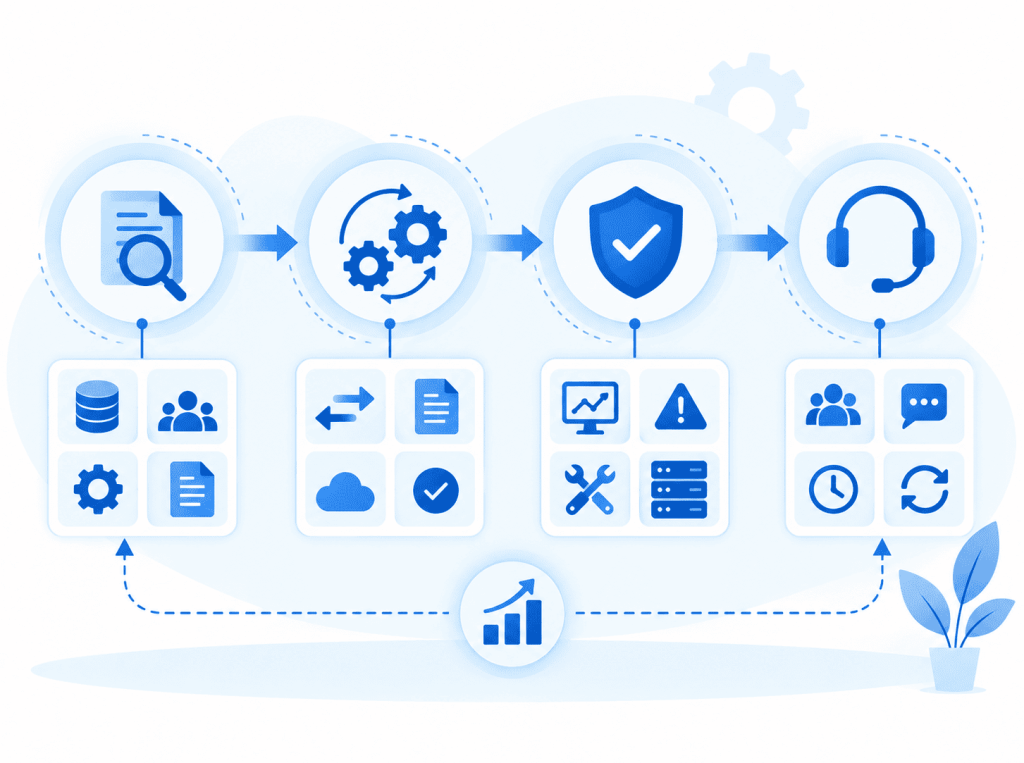
Two views of a structured transition into managed service.
Begin by reviewing the current environment, users, suppliers, known issues and responsibilities. The proposed service then sets out what is included, how support will be requested, which targets apply and what remains with the client or another provider. During transition, access and available documentation are checked, priorities are agreed and immediate risks or gaps are recorded. Stabilisation addresses approved urgent work without assuming every issue can be resolved at once. Ongoing support follows the agreed operating model, with service information and review conversations used to plan maintenance, projects or changes when needed.
WHO WE SUPPORT
The appropriate service depends on internal capability, working patterns, systems and the responsibilities your organisation wants to retain.
Obtain structured support and technology oversight without assuming the organisation needs a complete internal IT function or every available managed service.
Add capacity around agreed operational activities while internal colleagues retain organisational knowledge, strategic ownership and the responsibilities they are best placed to manage.
Create clearer processes for users, devices, access, suppliers and support as the organisation adds people, locations, applications or more complex operating requirements.
Support client-facing teams that depend on reliable access, collaboration and information handling, with service responsibilities aligned to professional and operational requirements.
Plan proportionate support around budgets, volunteers, employees, members and changing responsibilities without introducing unnecessary tools or avoidable administrative burden.
Coordinate support for distributed users, devices, identities and collaboration platforms through clear remote routes and agreed arrangements for work requiring physical attendance.
CONNECTED TECHNOLOGY SERVICES
Managed IT can provide the operating foundation for other priorities, but additional services should follow a defined need. Pollysys can separately support Microsoft 365, AWS, Cloud Services and Cybersecurity, or help assess suitable opportunities through AI Consultancy and Automation & Agentic AI.

Pollysys can plan a provider transition where access, cooperation and the required service scope can be established. The process should cover administrative access, licences, suppliers, supported assets, open issues, documentation and responsibilities. Gaps or dependencies discovered during handover are recorded and prioritised with you. A transition cannot responsibly be described as entirely risk-free or guaranteed to avoid disruption.
The applicable service targets, hours, priorities, exclusions and escalation arrangements should be documented before service begins. These terms may vary by package and client requirement.
That depends on the services and platforms your organisation uses. Managed IT does not automatically move information to a new location. Discovery should document relevant systems, suppliers and known storage arrangements. Any proposed change should consider operational, security, contractual and data-protection requirements, with specialist advisers involved where legal interpretation is needed.
Yes, a co-managed arrangement may be appropriate when responsibilities are divided clearly. The service design should identify which activities remain internal, which move to Pollysys and how shared issues are handled. Access, communication, escalation and decision-making need explicit owners so work is not duplicated or overlooked.
The answer depends on the approved service package and your environment. Included activities, supported users and assets, service hours, targets and exclusions should be listed in the proposal or contract. Projects such as migrations, office moves or major platform changes may be scoped separately. Third-party licences and charges should also be identified.
Onboarding normally begins with discovery and an agreed service scope, followed by access checks, documentation, supplier coordination and prioritisation of known issues. Tool deployment and stabilisation activities depend on the environment and approved plan. You should know what information is required, who owns each action and how progress or gaps will be reported.
START WITH CLARITY
Discuss your current environment, recurring concerns and support responsibilities. Pollysys can help define whether a focused review, planned improvement, co-managed arrangement or fully managed service is the appropriate next step.