AI
Four Ways Marketers Are Actually Using AI Right Now
The loudest conversations about AI in marketing tend to focus on mass-producing content or replacing creative work. Day-to-day use is usually less dramatic and more useful. Marketing teams are applying AI to organise information, explore ideas, adapt approved material and identify patterns that deserve human attention.
· 9 min read
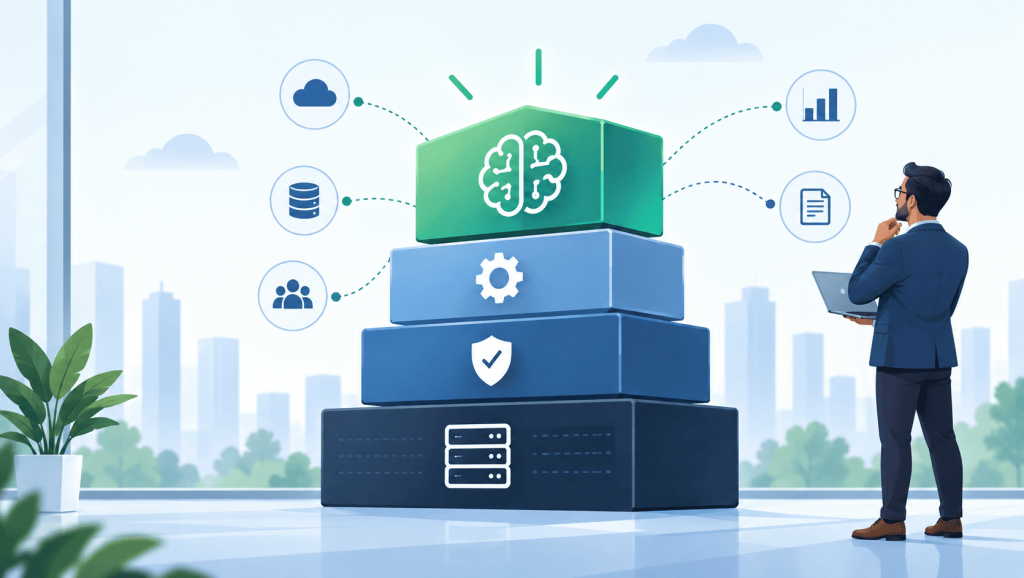
The difference between productive use and more noise is the quality of the brief, source material and review process. AI can accelerate parts of the work, but it does not know a brand, customer or regulatory context simply because it can generate fluent copy. Marketers still need to decide what is true, relevant, distinctive and appropriate to publish.
The four applications below reflect practical ways AI can support modern marketing without becoming the strategy itself. Each begins with human direction and ends with human judgement. That approach helps organisations benefit from speed while protecting accuracy, brand consistency, personal data and the trust of the people they want to reach.
Turning scattered research into a clearer audience view
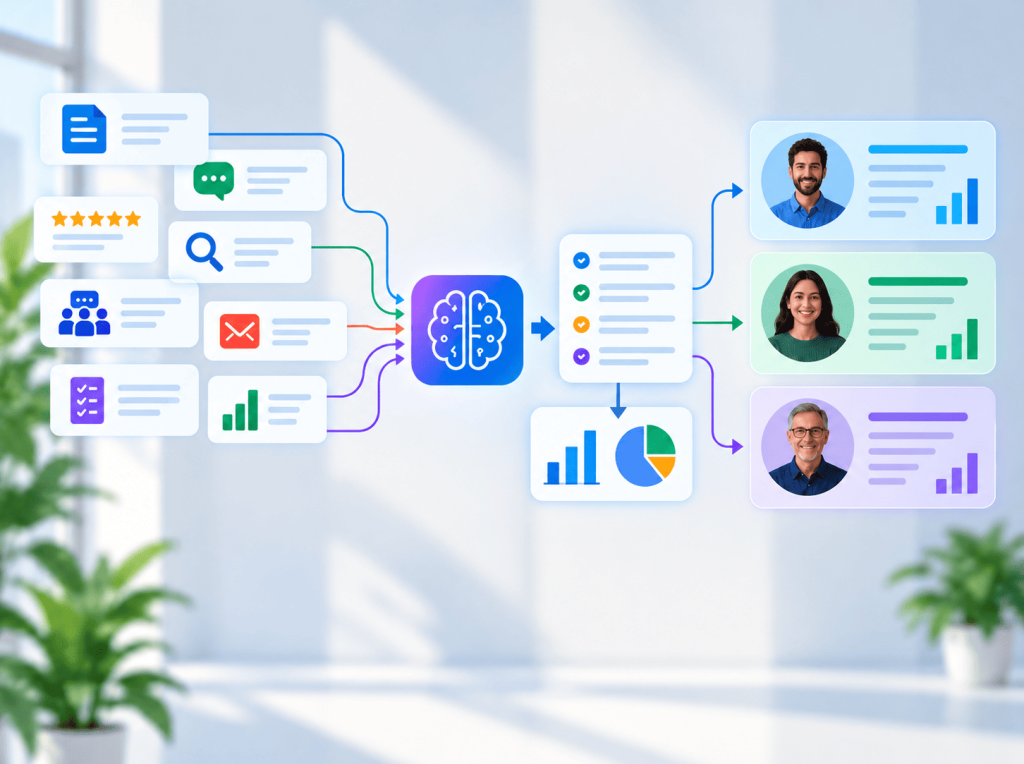
Marketing teams collect signals from interviews, enquiry notes, reviews, search queries, sales conversations, surveys and campaign results. The difficulty is often not obtaining information but bringing it together. AI can help classify comments, summarise recurring themes and compare language used by different audience groups, giving marketers a faster starting point for investigation.
The output should be treated as analysis to verify, not unquestioned customer truth. A summary may flatten important differences, overlook minority views or give undue weight to repeated but unrepresentative comments. Marketers should inspect source material, test conclusions with colleagues and preserve the context behind sensitive findings.
Privacy matters as well. Personal data should not be copied into an AI tool without understanding the purpose, lawful basis, supplier terms and information-handling arrangements. Anonymisation or aggregation may be more appropriate for many research tasks. Used carefully, AI can reduce the time spent sorting material and help teams find better questions. The valuable result is not an instant persona; it is a clearer, evidence-informed view of what to explore next.
Developing stronger briefs, outlines and first drafts
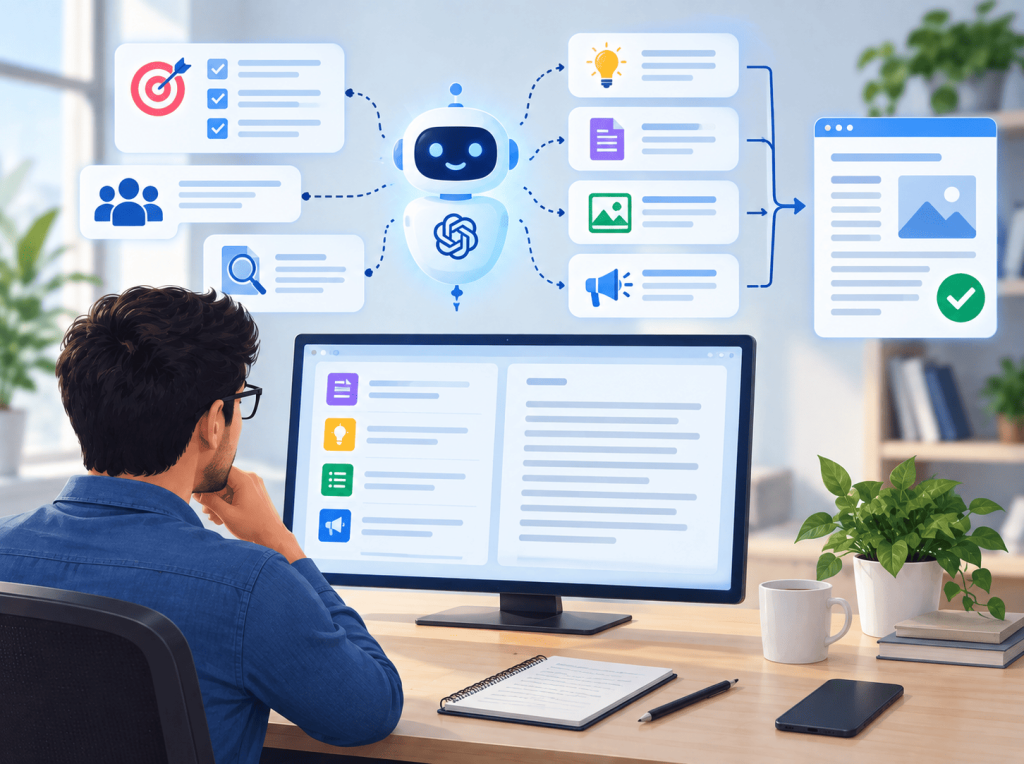
AI is used before the polished creative stage. A marketer can use it to challenge a brief, suggest missing customer questions, organise an article outline or produce several approaches for a headline. Starting from approved facts, audience needs and a defined objective produces more useful work than asking for a campaign from a vague prompt.
First drafts can also help teams move past the blank page, particularly for routine email variations, social captions, landing-page structures or internal campaign summaries. The draft should remain visibly provisional. Someone who understands the subject and the brand must check accuracy, tone, originality, legal considerations and whether the content genuinely helps its intended reader.
Publishing large volumes of lightly reviewed AI text can make a website repetitive and indistinguishable. Search visibility still depends on useful, trustworthy content rather than production speed alone. The best use of AI is often to create options, expose gaps and accelerate iteration. Human expertise supplies the experience, examples, judgement and point of view that make the final content worth reading.
Adapting approved content for different audiences and channels
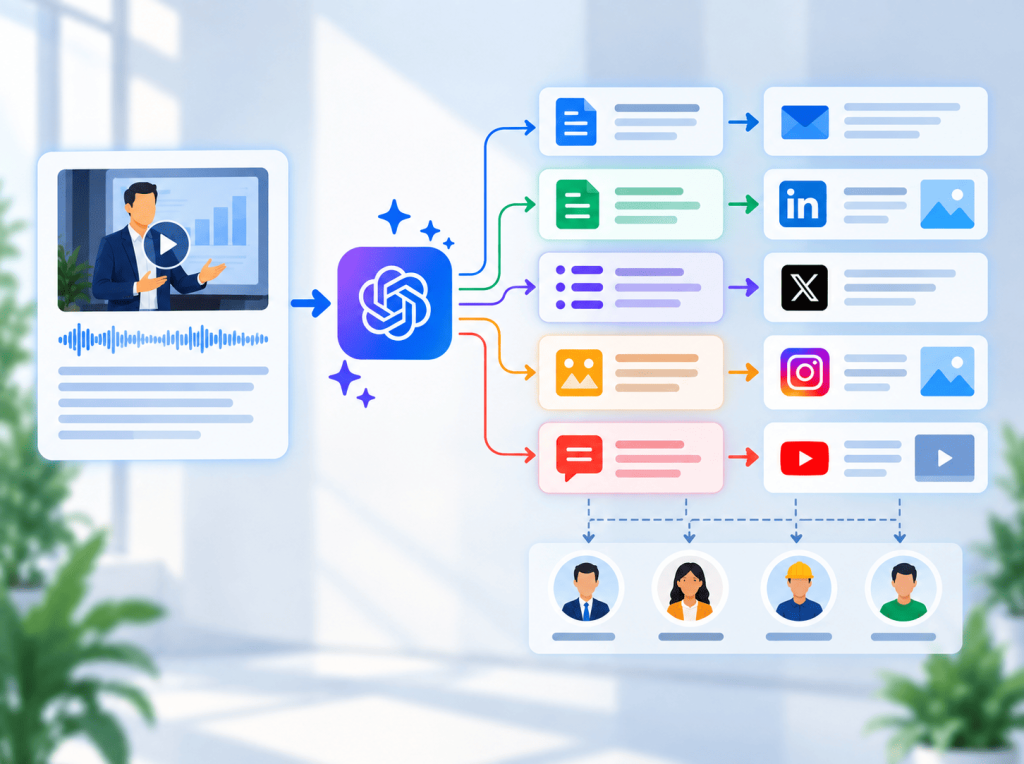
Source content can support several formats. Marketers use AI to turn an approved webinar transcript into a summary, shorten a report for an email, propose social posts or adapt technical material for a non-specialist audience. This reduces editing while allowing the team to concentrate on message, timing and distribution.
Adaptation should not become careless copying. Each channel has its context, and each audience may need distinct evidence, language and next steps. A concise social post cannot carry every qualification from a detailed article, so reviewers must ensure that shortening does not make a claim misleading. Brand terminology, regulated wording and factual statements should be protected with clear instructions and checks.
AI can support personalisation by suggesting variations for broad audience segments or stages of a customer journey. That is different from feeding unrestricted personal profiles into a model. Teams should use appropriate data and remain transparent where required. The objective is relevant communication, not surveillance. Begin with content, limit the transformation and retain human approval before material reaches the public.

Finding patterns and improving campaign decisions
Campaign platforms use machine learning for bidding, targeting and creative combinations, while marketers use AI to summarise performance and surface changes. It can help compare messages, identify recurring search themes, group enquiries or highlight where people leave a conversion journey. This can make reporting faster and focus attention on the questions behind the numbers.
AI-generated explanations should not be mistaken for proven causes. A fall in conversions may relate to audience mix, tracking problems, seasonality, pricing or changes elsewhere in the customer journey. Marketers must check the data, measurement setup and business context before changing a campaign. Automated optimisation can also pursue the metric it is given, even when that metric is a substitute for valuable enquiries or customer outcomes.
Use AI to propose hypotheses and prioritise investigation, then test changes in a controlled way. Keep records of decisions and compare results against a baseline. The aim is not to remove marketers from campaign management; it is to help them spend less time assembling reports and more time interpreting evidence.
The useful question is not “Can AI create this?”
A better question is: “Which part of this work should AI support, and what must people still decide?” That shift keeps attention on audience value, trustworthy source material and measurable outcomes. It also makes it easier to choose tools and controls that match the task rather than forcing every marketing activity through the same system.
Final thoughts
AI is already useful in marketing when it handles bounded, reviewable parts of the workflow. It can organise research, improve briefs, create draft options, adapt approved material and direct attention towards patterns in campaign data. None of those uses removes the need for a clear strategy or a marketer who understands the audience.
The quality of the result depends on what surrounds the tool: reliable information, a specific purpose, thoughtful prompts, brand guidance, privacy controls and human review. Teams should be especially careful when personal data, regulated claims or automated customer decisions are involved. Faster production is not automatically better marketing if it creates generic content, weakens trust or optimises the wrong measure.
Start with one recurring task and define what improvement would look like. Keep the first use narrow, review the output and record the time or quality difference. Expand only when the evidence is convincing. AI earns a lasting place in marketing when it supports better judgement and stronger communication—not when it simply produces more material.
Pollysys— independent AI & managed IT for UK businesses.
Got a question this raised?
Book a consultation