AI
Is Your Business Ready for Agentic AI? A Practical UK Checklist
Agentic AI moves beyond producing an answer. An agent may break a goal into steps, use connected tools, retrieve information and take actions within a workflow. That can make it useful for research, administration, service operations and other repeatable work. It also means that an error can travel further than an inaccurate paragraph on a screen.
· 9 min read
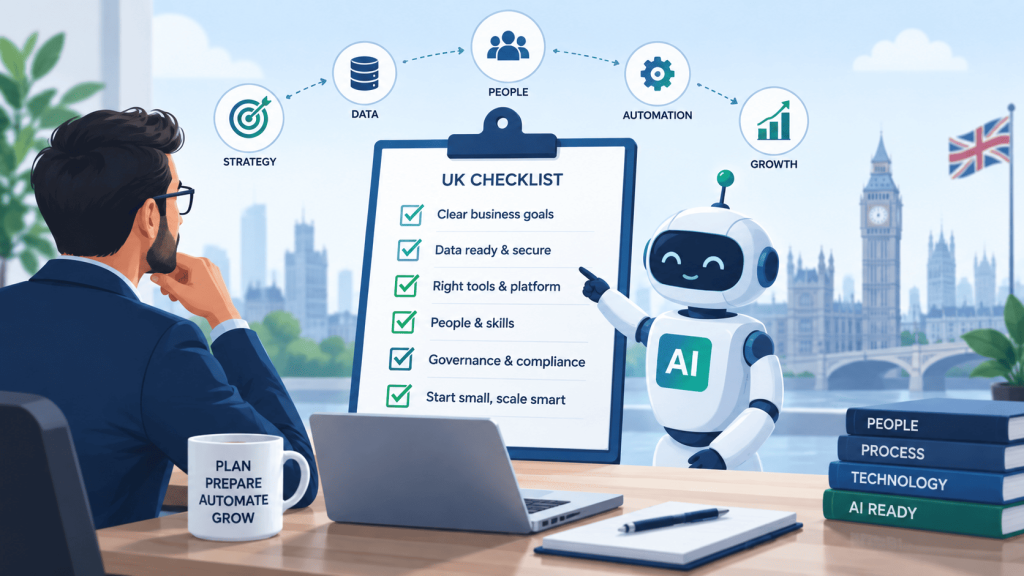
Readiness is therefore not a question of whether your team has tried a chatbot. It is whether a suitable process exists, the information can be used responsibly, permissions are controlled and somebody remains accountable for the result. Current UK guidance stresses the importance of defining boundaries, considering failure scenarios and choosing an appropriate level of human oversight for agentic systems.
The following four-part checklist helps leaders examine those foundations before selecting a platform or launching a pilot. A “not yet” answer is useful: it identifies work to complete before an agent receives access to business systems, customer information or actions that matter.
Is there a clear, suitable process for the agent?
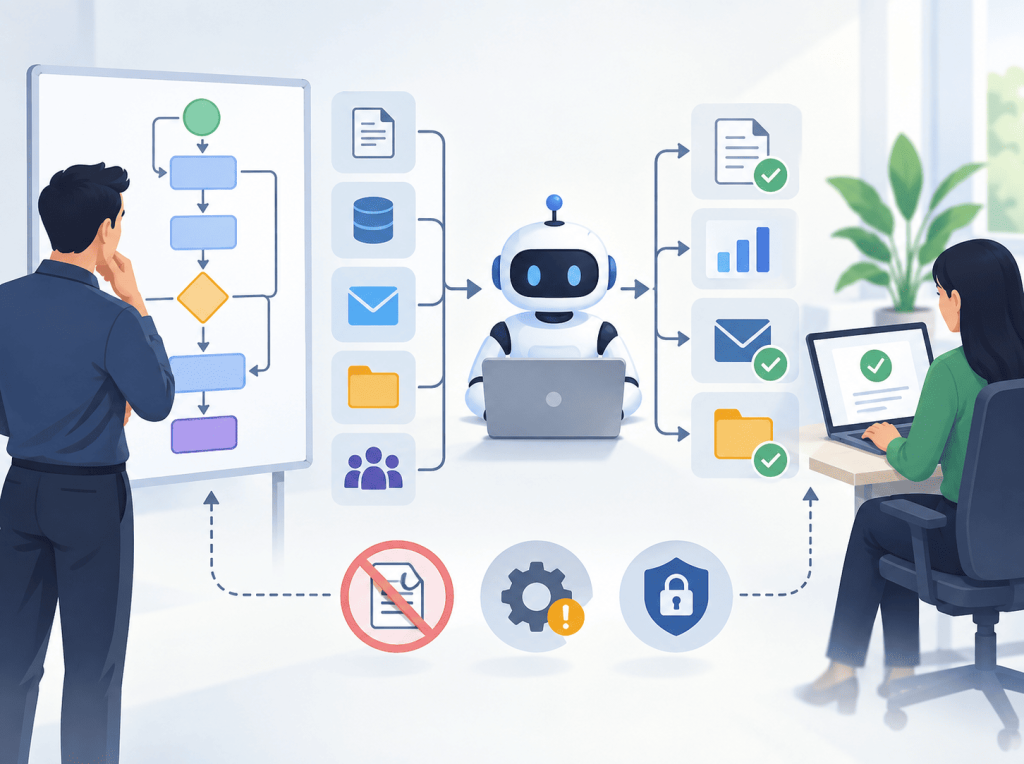
Begin with the work, not the technology. A suitable first use case normally has a recognisable objective, repeatable inputs, defined steps and an output that a person can assess. Examples might include gathering approved information, preparing a routine summary or routing a request according to established rules. Open-ended activities with unclear success criteria are harder to control and evaluate.
Map how the work happens today. Identify who starts it, which systems are used, where judgement is required and what exceptions occur. Separate assistance from authority: drafting a response is different from sending it, and recommending an action is different from approving a payment or changing a client record.
Define what the agent must never do as carefully as what it should do. These boundaries should cover prohibited data, systems, communications and decisions. If the process cannot be explained without relying on unwritten knowledge held by one person, document it before automating it. A clear process provides the foundation for testing, monitoring and deciding whether agentic AI is appropriate at all.
Are the data and connected tools ready?
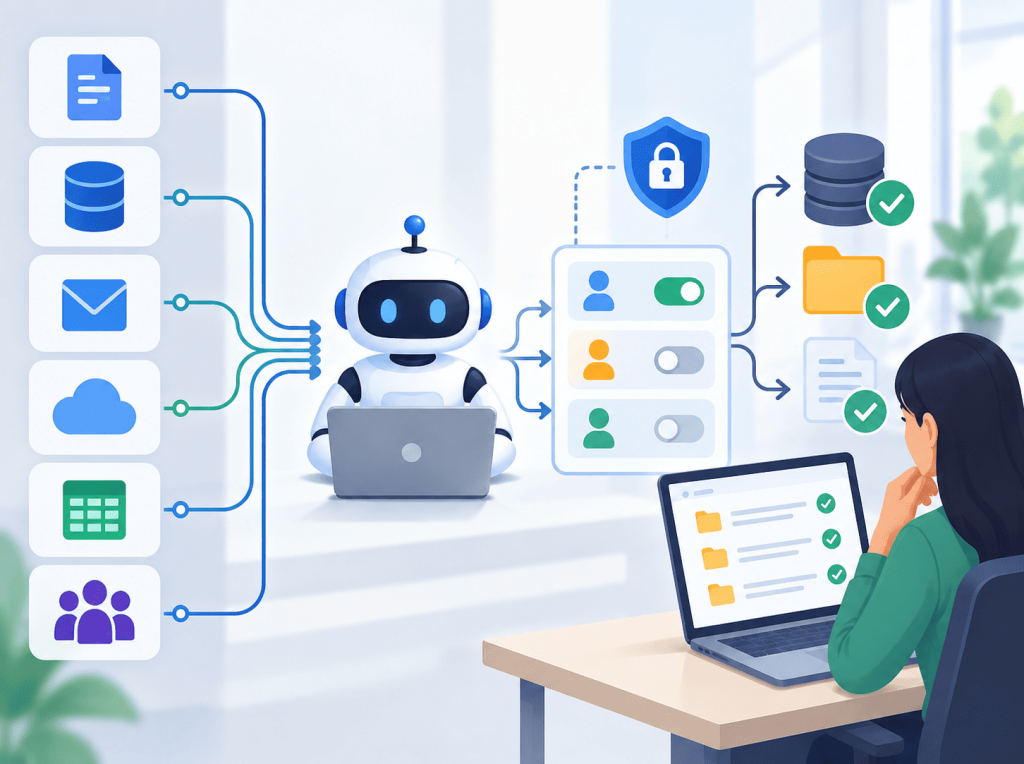
An agent can only work well with information it can locate, interpret and access appropriately. Identify the documents, records, messages or databases required for the use case. Decide which source is authoritative, how current it is and who is responsible for its quality. Duplicate or contradictory information can produce inconsistent actions even when the underlying model performs as expected.
Next, examine permissions. The agent should receive only the access needed for its defined task. Read-only access may be sufficient during an early pilot; the ability to create, change, send or delete information introduces greater consequences. Keep development and testing separate from live environments where practical, and avoid using sensitive personal or confidential information simply because it is readily available.
Where personal data is involved, the organisation must consider its responsibilities under UK data protection law, including purpose, necessity, transparency and individual rights. Record what information is processed, where it goes and how long it is retained. Data readiness is not merely tidying files—it is establishing trustworthy sources and proportionate access.
Have you matched autonomy to the level of risk?
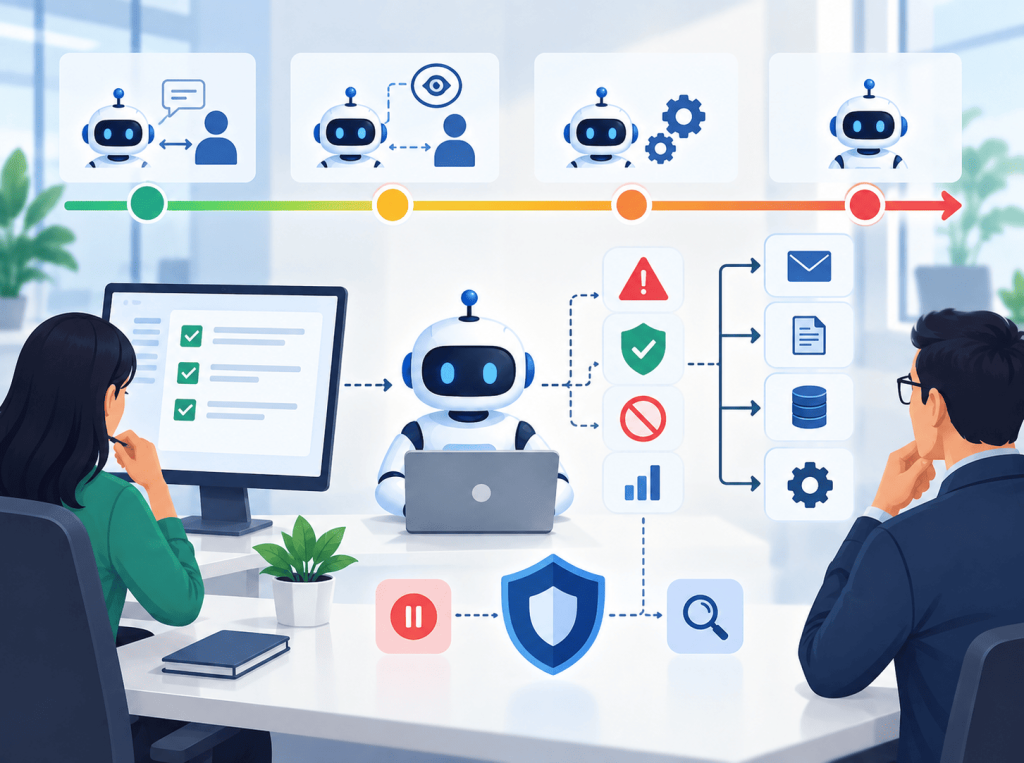
Not every agent needs the freedom to act independently. Choose the lowest level of autonomy that can still test the business value. A human-in-the-loop design requires approval before an important action. Human-on-the-loop arrangements allow the agent to act while a person monitors and can intervene. Fully autonomous operation removes that review and should be considered only where consequences are limited and controls are mature.
List failure scenarios before deployment. Could the agent send an inaccurate message, disclose information, follow malicious instructions, repeat an action or make a change outside its intended scope? Consider how those events would be detected, stopped and corrected. Apply limits to tools, transactions, recipients, data sources, time and volume where the platform supports them.
Logging and monitoring should make the agent’s activity understandable enough for investigation. Set clear escalation rules and a reliable way to pause operation. Human oversight must be real rather than ceremonial: reviewers need the time, information and authority to challenge outputs. Greater potential harm should always mean tighter boundaries and stronger approval.

Is there ownership, testing and a useful measure of success?
An agentic AI pilot needs an accountable owner who understands the business process and the consequences of failure. Technical teams can configure the system, but process owners must decide what good work looks like, which exceptions matter and when the pilot should stop. Include the people who perform or receive the work; their feedback often exposes issues that a demonstration misses.
Test representative cases as well as difficult ones. Include incomplete inputs, conflicting information, unusual requests and attempts to move the agent beyond its instructions. Record results and review failures rather than correcting them. Changes to prompts, tools, models or data sources should be controlled because each can alter behaviour.
Measure an outcome, not the novelty of using AI. Appropriate measures might include handling time, rework, accuracy, response consistency, user adoption or the number of exceptions requiring intervention. Compare results with a baseline and include the cost of review and maintenance. A pilot is successful only when its benefits remain worthwhile after human oversight, risk controls and ownership are included.
Readiness means knowing where control must remain
Being ready for agentic AI does not require perfect systems. It requires a defined use case, usable information, proportionate access, credible safeguards and people who can own the result. Start with a narrow workflow where actions are reversible and value can be measured. Expand only when evidence supports doing so.
Final thoughts
Agentic AI can be valuable because it connects reasoning, tools and action. Those same characteristics make careful design essential. A rushed deployment may automate confusion, widen access or make decisions harder to explain. A considered pilot starts with the process, limits authority and treats human oversight as part of the operating model.
For UK organisations, data protection and security should be addressed during design rather than added after launch. Ask what personal or confidential information is involved, why it is necessary, which systems the agent can reach and who can intervene. Establish named ownership, monitoring and a clear route for reporting unexpected behaviour.
The best first project is rarely the most ambitious one. Choose a task that is frequent enough to matter, structured enough to evaluate and contained enough to manage safely. If the pilot cannot demonstrate value under realistic controls, that is a useful finding. Readiness is the ability to make an informed decision—not an obligation to deploy an agent.
Pollysys— independent AI & managed IT for UK businesses.
Got a question this raised?
Book a consultation